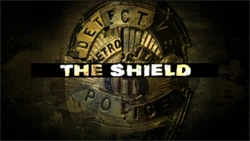
Dean Ambrose's Individual Run (2014–2016)
The Lunatic Fringe tore the ring apart one wild night at a time.

Dean Ambrose's Individual Run (2014–2016) traces the solo career of one of WWE's most electric and unpredictable performers after the dissolution of The Shield. Following the stable's fracturing in mid-2014, Ambrose stepped out from the shadow of his former partners and carved a wildly idiosyncratic identity as a one-man storm—part brawler, part poet, part full-blown lunatic—captivating audiences with his raw charisma and refusal to follow any conventional booking logic.
This period is remembered by fans as the era when Ambrose was at his most feral and free: a champion who treated the title like a personal insult, a rival who could be your best friend one week and your worst enemy the next, and a performer whose promos felt less like scripted segments and more like live, unscripted confrontations. His solo arc gave WWE a rare, genuinely dangerous main-event presence and left a lasting imprint on the roster's culture.
- Character
- Dean Ambrose (Joshua Farthing)
- Affiliation
- The Shield (2012–2014), then independent solo competitor
- Solo run window
- 2014–2016
- Signature finisher
- Dirty Deeds
- Notable title reign
- WWE World Heavyweight Champion (won at SummerSlam 2014)
- Key rival
- Roman Reigns
- Status
- Departed WWE in late 2016
Lore & Background
When The Shield's three-man machine shattered in the summer of 2014, Dean Ambrose was left standing in the wreckage with nothing but a guitar, a tattered jacket, and a reputation for saying the unsayable. Rather than retreat into a secondary role, he leaned into the chaos. His solo persona—often called 'The Lunatic Fringe'—was a study in controlled madness: a man who would hand a microphone to a fan mid-promo, who would strum his Gibson Les Paul between sentences, who treated every opponent as both a personal enemy and a reluctant confidant. He spoke in fragments, in half-finished thoughts, in insults that doubled as compliments, and the crowd ate every word.
His championship reign, though brief, was the high-water mark of that solo identity. Capturing the WWE World Heavyweight Championship at SummerSlam 2014 by defeating John Cena, Ambrose carried the belt not as a trophy but as a burden he was determined to make everyone else feel. His defense against Roman Reigns at Survivor Series 2014 became a defining moment of the era—a brutal, emotional slugfest that felt less like a scheduled match and more like two brothers settling a score that had no clean answer. Losing the title did not diminish him; if anything, it sharpened the rivalry that would define the next stretch of his career.
Through 2015 and into 2016, Ambrose's solo run was a series of escalating confrontations, impromptu alliances, and moments of pure, unscripted theater. He feuded with former Shield brothers, clashed with the Wyatt Family's orbit, and repeatedly proved that his greatest weapon was unpredictability. When his tenure in WWE concluded in late 2016, fans were left with a career that felt less like a resume and more like a series of unforgettable nights that never quite repeated themselves.
In Their Own Story
The arena lights were dimmed to a bruised purple. The crowd noise was a low, constant hum—thousands of people waiting, breathing together. Then the guitar riff hit. Not a full song. Just three chords, strummed hard, almost angry, echoing off the steel rafters. The crowd roared, and the roar turned into a chant that shook the floorboards.
He walked out in a torn jacket, the guitar slung low on his back, eyes scanning the ring like a man looking for a fight he hadn't started yet. He didn't go to the entrance ramp's usual spot. He stopped mid-walk, turned, and looked directly at the camera. Smiled. Said nothing. Walked on.
In the ring, his opponent was already waiting, jaw set, gloves wrapped tight. The referee called for the bell. The first exchange was a trade of heavy rights that sent both men stumbling. The crowd gasped, then exploded. Ambrose dropped to one knee, spat blood onto the canvas, and laughed. He grabbed the guitar from the apron, strummed one more chord—loud, defiant—and swung it across his opponent's ribs. The bell rang. The crowd was on its feet. He set the guitar down gently, like placing a child to bed, and walked up the ramp without looking back.
The hum of the arena followed him into the tunnel, long after the lights went dark.
Reader's Guide
The Shield's three-man dominance ended in mid-2014 when Seth Rollins turned on Dean Ambrose during a Raw taping, shattering the stable overnight. The stakes were immediate: Ambrose went from one-third of a powerhouse trio to a lone competitor in a division that expected him to fade. He refused. Within weeks, he was pushing for a main-event spot that no one had offered him.
The turning point came at SummerSlam 2014. Ambrose faced John Cena for the WWE World Heavyweight Championship in a match that was less a contest and more a declaration of war. The final sequence—Ambrose hitting Dirty Deeds to retain his place in the main event—landed like a gut punch. He was now the champion, and the ring belonged to him, at least for a night.
That night did not last. At Survivor Series 2014, Roman Reigns—his former Shield brother, now his bitterest rival—challenged him in a match that became the emotional core of the era. The two traded blows with the ferocity of men settling a family debt. Reigns scored the pinfall, and the title changed hands, but Ambrose's reputation as a legitimate main-event force was cemented. The rivalry between the two defined the next stretch of both their careers.
Through 2015 and into 2016, Ambrose's solo run became a series of escalating, often chaotic confrontations. He clashed with former allies, engaged in multi-man feuds, and repeatedly proved that his greatest asset was the audience's inability to predict his next move. By the time his WWE tenure concluded in late 2016, his solo arc had reshaped how the roster approached unpredictability as a storytelling tool, leaving a mark that outlasted his departure.
Did You Know?
- Dean Ambrose's real name is Joshua Farthing, and he was a Marine before his wrestling career, a background that informed the raw, no-nonsense edge of his in-ring persona.
- His signature guitar was not merely a prop; he was a skilled player, and the instrument became so central to his identity that it appeared in his entrance, his promos, and even as a weapon in matches.
- Ambrose's 2014 WWE Championship win over John Cena at SummerSlam was a major upset that elevated him from a mid-card Shield member to a recognized main-event competitor almost overnight.
- His rivalry with Roman Reigns was notable for its emotional authenticity; the two had trained and lived together as part of The Shield, making their in-ring conflicts feel deeply personal to audiences.
More in Feuds & Timeline
Elsewhere in the The Shield universe
Spotted an error? Know more?
This is a living reference — every entry is fact-audited, and reader corrections feed straight into our audit queue. Suggest an edit · See this site's audit record