Seth Rollins' WrestleMania 30 Betrayal
Three brothers, one stage, and the first crack in the armor that no one saw coming.

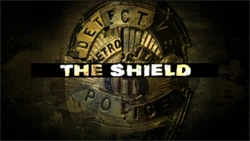
Seth Rollins' WrestleMania 30 moment is a pivotal beat in the long-running storyline of The Shield, the three-man faction of Dean Ambrose, Roman Reigns, and Seth Rollins that dominated WWE from 2012 onward. At WrestleMania 30 in Glendale, Arizona, the group's internal chemistry was tested on the biggest stage of the year, and what transpired became a flashpoint that fans still dissect when discussing the faction's eventual fracture.
This entry examines that specific WrestleMania 30 sequence as part of the broader Shield arc—how a unit built on unbreakable loyalty began to show cracks, and how Seth's position within the group shifted in ways that would ultimately reshape his career and the faction's legacy.
- Faction
- The Shield
- Core Members
- Dean Ambrose, Roman Reigns, Seth Rollins
- Event
- WrestleMania 30
- Year
- 2014
- Venue Location
- Glendale, Arizona
- Faction Status
- Disbanded (2014–2015)
Lore & Background
The Shield entered 2014 at the peak of their cultural influence. Since their 2012 debut, the trio had redefined what a stable could be in professional wrestling: a unit that moved as one, spoke with one voice, and presented an almost mythic image of brotherhood. Their entrance—three men in black tactical gear, moving in lockstep—became one of the most recognizable visuals in the company's history. By WrestleMania 30, they had weathered feuds with major stars and had become the faction to beat.
Yet beneath the choreographed unity, individual ambitions were growing. Seth Rollins, the youngest of the three, had been building a distinct in-ring identity and a fan base that responded to his charisma and athleticism. The WrestleMania 30 sequence captured a moment where the group's dynamic was under strain: the expectation of total unity was colliding with the reality that three different performers with different long-term visions were sharing a brand. What played out on that card became a narrative hinge—fans watching in the arena and at home sensed that the inviolable brotherhood was no longer a foregone conclusion.
The aftermath of WrestleMania 30 fed into months of escalating tension within the group. The Shield's storyline for the remainder of 2014 became one of slow erosion: trust questioned, loyalty tested, and the public image of three inseparable warriors giving way to something more human and fractured. For fans who had followed the faction since 2012, the WrestleMania 30 moment served as the first clear signal that the era of unbreakable unity was drawing to a close.
In Their Own Story
The arena hummed with a low, electric buzz. Three figures stood in the shadow of the entrance ramp, their black silhouettes barely distinguishable from the darkness behind them. The crowd's chant was a single, rolling wave—*SHIELD, SHIELD, SHIELD*—and for a moment it felt like nothing in the world could split them apart.
Seth stepped forward first, then Dean, then Roman. The choreography was seamless, the kind of precision that had become their signature. But as they reached the ring, Seth paused. Just a half-second. Just long enough for the rhythm to stutter. He looked back over his shoulder at the other two, and something in his expression—something small and private—didn't match the mask of brotherhood they'd worn for two years.
The crowd didn't notice. The commentators didn't flag it. But the three of them in that ring, under those blinding lights, all felt it. The armor had a seam, and the seam was starting to open.
Reader's Guide
The Shield enters WrestleMania 30 as the most dominant faction in the company. Dean Ambrose, Roman Reigns, and Seth Rollins have spent two years presenting an image of total unity, and the crowd in Glendale expects the same lockstep performance they've delivered at every major stop.
The stakes are high: WrestleMania is the stage where legacies are cemented or shattered, and The Shield's brand is built on the idea that they are one entity. Any deviation from that script reads as a fracture.
The turning-point moment comes during their match sequence. What unfolds is less a single dramatic turn and more a subtle shift in body language, in who takes the lead, in who looks to whom for validation. Seth's positioning, his timing, his brief moment of independence from the group's choreography—these small choices signal to the audience that the internal hierarchy is no longer settled. The other two register it. The crowd, watching closely, registers it too.
The aftermath reshapes the faction's trajectory for the rest of 2014. The easy, unquestioned brotherhood gives way to a more complicated dynamic: alliances tested, roles renegotiated, and the slow dawning that three individuals sharing a brand is not the same as three people sharing a soul. The Shield's story moves from a fable of unity into a drama of competing ambitions, and WrestleMania 30 marks the first chapter of that new, messier story.
Did You Know?
- The Shield's three-man entrance sequence—moving in synchronized formation in black tactical gear—became one of WWE's most imitated and referenced visual signatures in the 2010s.
- The faction's eventual breakup in late 2014 and 2015 became one of the most discussed storyline arcs in modern WWE history, with each member going on to pursue distinct solo paths.
- Seth Rollins was the youngest member of The Shield, and his in-ring style emphasized a more athletic, high-flying approach compared to the power-based styles of his two partners.
- The Shield's 2012 debut was deliberately designed to present them as an unstoppable, almost supernatural unit, a concept that made any later internal conflict feel like a genuine loss to the audience.
More in Feuds & Timeline
Elsewhere in the The Shield universe
Spotted an error? Know more?
This is a living reference — every entry is fact-audited, and reader corrections feed straight into our audit queue. Suggest an edit · See this site's audit record