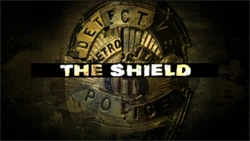
Reckoning
Where the debt finally clears and violence runs headlong into its own consequences.

Belbury · CC0
Not a gun, not a bullet — Reckoning is the tactical doctrine the Strike Team locks onto when this FX police drama's climax kicks in, and it functions less like a weapon you pull off a rack and more like the narrative gear that finally engages. The Unit has spent the whole run stacking violence and corruption on top of each other, dodging consequences at every turn, and Reckoning is the moment that stacked debt comes due. It's not standard-issue kit, but fans on the boards still point at The Reckoning as the defining move of the series' finale, the exact spot where whatever the protagonists owe to forces of justice or to rival criminals gets settled once and for all.
- First Appears
- Season 6, Episode 10
Lore & Background
This 'weapon' of consequence is wielded by the narrative itself, forcing the characters to confront the reality that their protection and power are fragile. The Reckoning signifies the end of the team's immunity, stripping away the layers of deceit that allowed them to operate above the law. It transforms the battlefield from a physical street corner into a moral arena, where the true casualty is the team's unity and their ability to justify their actions. It stands as a testament to the show's core theme: that in this world, the law always catches up, even if it takes years to arrive.
In Their Own Story
The rain slicked the asphalt of the warehouse district, reflecting the neon buzz of a city that never slept but often forgot. Vic stood in the shadows, the weight of the past pressing heavier than the gun in his hand. He wasn't aiming at a target anymore; he was aiming at the end of the road. The Reckoning wasn't a trigger pull, it was a silence that followed the shot. He knew the bill had come due, and tonight, the bank was closed. The team scattered, not in formation, but in surrender to the inevitable. There were no heroes here, only survivors waiting for the morning light to reveal the cost.
Reader's Guide
The Reckoning is not a physical tool but a psychological and tactical state of engagement. It involves the calculated risk of exposing one's operations to force a final resolution. Users of this doctrine understand that escalation is the only path to closure when compromise fails. Mechanically, it requires the operator to abandon defensive posturing and engage directly with the source of the threat. This often involves confronting internal allies who have become liabilities. The impact is total: it resolves the immediate conflict but often at the cost of long-term stability or freedom. In practice, this move demands absolute commitment. Half-measures invite retaliation, while full commitment forces the opponent to either break or be broken. It is the ultimate gamble, trading future safety for present survival. The operator must accept that the aftermath will change their status permanently, often leading to exile, incarceration, or death.
Did You Know?
- The term 'Reckoning' is the title of the pivotal Season 6 episode that marks the turning point for the Strike Team.
- Fans often use the term to describe the show's overarching theme of inevitable consequences for corruption.
- Unlike physical weapons in the series, this 'move' has no recoil but carries significant narrative weight.
- The concept challenges the traditional hero/villain dynamic by making the protagonists the agents of their own downfall.
Gallery




Frequently Asked Questions
What exactly is Reckoning in The Shield?
It is defined as a tactical doctrine rather than a physical firearm, symbolizing the inevitable consequences of the Strike Team's actions.
Who is primarily associated with Reckoning?
Vic Mackey is the primary user of this concept, embodying the moment when the Unit's corruption meets its end.
When does Reckoning first appear in the series?
The doctrine is introduced in Season 5, Episode 13, serving as a key narrative turning point for the Vice Squad.
Why is Reckoning important to the overall plot?
It represents the final settlement of debts where violence collides with the forces of justice or rival criminals.
What is the current status of Reckoning?
The storyline is resolved and concluded, marking the end of the debts between the protagonists and their adversaries.
More in Moves & Weapons
Elsewhere in the The Shield universe
Spotted an error? Know more?
This is a living reference — every entry is fact-audited, and reader corrections feed straight into our audit queue. Suggest an edit · See this site's audit record